 Recently several authors, including people like Cory Doctorow and J.C. Hutchins have reported that Amazon.com has gone to war with Macmillan Books, pulling their entire library off its virtual shelves. The New York Times reports that the reason behind this “ban” is a dispute over pricing of eBooks. The story is that Macmillan wants Amazon to increase the base price for eBooks to $15 US, up from $10 US and in response Amazon has stopped selling Macmillan’s products.
Has Amazon Gone Too Far?
Herein lies the problem with allowing Amazon to become so powerful as to dictate to publishers what they will be charging for the items that they’re selling. For years publishers have been telling authors just how much they would be selling the author’s works for and now the tables are turned. The average cost for a first-run hardcover book is approximately $30 US, or about $38 CAN if you live in Canada like I do. Authors receive royalties based on the selling price of the book, so a lower cover price means less money for the authors. Publishers never seemed to have a problem with giving authors less money for their books—the average selling price for a hardcover book these days runs around $20 US despite the $30 cover price. People just don’t seem interested in buying books at the current cover price so publishers are constantly dropping that price in order to get more books off the shelves which means that authors are getting less and less money back in royalties. For years books have been perceived as “disposable” by many people which is a huge problem in itself. Now that Apple has released it’s new “larger iPod Touch” (ie: the iPad), there are more options for publishers besides Amazon’s Kindle and Barnes & Nobles Nook.
Amazon has thrown down the gauntlet and said, “We will sell your books on our terms or we will not sell your books at all.”
Publishers Not Without Fault
Publishers print thousands of copies of their books knowing that they will never be sold because it’s almost as cheap to print 75,000 copies as it is to print 50,000 copies—once the book is on the press and running, it really doesn’t take much more effort to print more copies. However all of these extra copies must also be transported and stored, and the paper doesn’t come cheap either so printing thousands of extra copies doesn’t really make sense. I’ve also read somewhere that Publishers feel that consumers will buy more books if they see more books on the shelves and that they commonly pulp (destroy/recycle) up to 40% of the books that they’ve printed! An article by the BBC in 2001 suggests that, “300,000 books are shredded in Britain every week.” A more recent article by the UK Daily Mail suggests that, “Publishers are quietly disposing of around 77 million unsold books a year.”
This is insanity.
eReading Devices Are Inherently Flawed
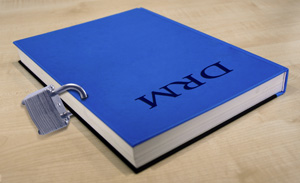
Now back to the problem of eBooks and eReading devices. The main problem with these devices is that most of them rely on DRM and closed operating systems to keep their customer base. This forces the user to purchase a closed device to consume closed content and only the closed content provided by the retailer. In other words, once you start adding to your Kindle or Nook library you are pretty much stuck in buying only the content that Amazon or Barnes & Noble sells because you cannot read this content on another device, you cannot resell it and you cannot lend it to someone else. And, as I’ve said before, you aren’t even purchasing the content that you’re getting, you are RENTING it. This makes the provider happy but it doesn’t do much for the end user.
Amazon’s End User License Agreement states;
“Use of Digital Content. Upon your payment of the applicable fees set by Amazon, Amazon grants you the non-exclusive right to keep a permanent copy of the applicable Digital Content and to view, use, and display such Digital Content an unlimited number of times, solely on the Device or as authorized by Amazon as part of the Service and solely for your personal, non-commercial use. Digital Content will be deemed licensed to you by Amazon under this Agreement unless otherwise expressly provided by Amazon.
Restrictions. Unless specifically indicated otherwise, you may not sell, rent, lease, distribute, broadcast, sublicense or otherwise assign any rights to the Digital Content or any portion of it to any third party, and you may not remove any proprietary notices or labels on the Digital Content. In addition, you may not, and you will not encourage, assist or authorize any other person to, bypass, modify, defeat or circumvent security features that protect the Digital Content.“
Which would make you think you own the content you’re purchasing, but while it says you can keep a “permanent copy,” it is a “permanent DRMed copy,” and we’ve already seen that Amazon can, at any time the wish, remove this “permanent copy” from your possession without you even knowing it. Also when someone owns an item, they generally have the right to resell it. Not so with Kindle eBooks.
A very useful annotated version of the Amazon EULA can be found here.
It is also common knowledge that Amazon is quietly compiling information on everything you read on your Amazon Kindle. This includes any websites that you may be scanning via your Kindle, except that up here in Canada the websurfing ability of the Kindle has been locked out with the exception of popping over to Wikipedia because we know that Canada is on another planet and we should not be allowed to surf the web up here. Amazon also knows where you are on the planet when you’re surfing or downloading information to your Kindle by pinpointing you through the 3G mapping feature and Google Maps. So if you’re using your Kindle, Amazon knows. Common sense would also imply that devices such as the Nook and the iPad will also have these tracking features quietly included in their core software.
An article by Cory Doctorow on BoingBoing entitled “EFF’s ebook-buyer’s guide to privacy” states;
“…your Kindle will periodically send information about you to Amazon. But exactly what information is sent? Amazon’s wording—”information related to the content on your Device and your use of it” —reads so broadly that it appears to allow Amazon to track all content that users put on the device, regardless of whether that content is purchased from Amazon. Some security researchers have indicated that the Kindle may even be tracking its users’ GPS locations. Is this the future of reading?”
Which begs the question, “Do we have the right to privacy when using our eReading devices?” The answer should obviously be YES… but is this the real answer?
Some Possible Solutions?
With the Amazon vs. Macmillan in the news, now is the time for other publishers to step forward to say, “Yeah! We want more money for our products!” Amazon can’t pull them all off their shelves otherwise they won’t have any products left to sell.
Secondly, Publishers need to rethink how they sell and publish books. Consumers enjoy the immediacy of an eBook but do not want the draconian DRM measures that come with a book in electronic format. You need to find another way to provide this content without DRM. You also need to look at new ways of providing physical books to the consumer—Most consumers only want to read the book, they don’t care if it’s a hardcover, trade, or mass market paperback. You should be providing them with choices from the get-go. Printing up 75,000 hardcover books in order to sell 25,000, sell off 10,000 as remainders and pulp the other 40,000 is just stupid and insanely wasteful. You need to start offering the consumer choices of format—Bibliophiles will be happy to pay $25 for a hardcover version of your publication which most other people would probably rather have a trade version or a paperback version. Sure you will end up selling books at a lower price, but you will sell MORE books in the end.
You also need to start providing the consumer with an electronic copy of the book when they purchase the premium version (hardcover/trade) of the book. When the Apple iPod first came out, people could take ANY CD, pop it into their computer and put it onto their iPod, this is what we need from publishers for eBooks. Providing a CD with each book may not be cost effective, but you could certainly provide a PIN number in each book and allow users to log onto a website to download the electronic copy onto an eReading device of their choice.
Finally eReading devices need to be as universal as iPods, but cheaper. If you want people to use your device then it needs to be open, and it needs to cost between $100 and $150. We also want the right to privacy and the expectation of not being tracked and scrutinized while we use the device that we’ve purchased. Retailers have no right to invade the consumer’s privacy by tracking their reading and surfing habits. It’s only a matter of time before a lawsuit pops up because of this.
Purchasing a current eReading device is like purchasing an automobile that will only run on a specific kind of fuel that is provided only by the car manufacturer. For the consumer to buy into this is just plain stupidity and shortsightedness, but then that’s what retailers like Amazon are relying on. It’s about time that we, as consumers, start speaking with our wallets and stop being stupid because of the sheer convenience of immediacy.
Use your head for more than a hat rack, people!

